At Wolfson Hillel, Ivrit is taught through a communicative language approach, enabling pupils to develop confidence and fluency in meaningful, real-life communication.
The curriculum aims to:
Teaching focuses on developing pupils’ ability to communicate through asking and answering questions, describing, comparing and expressing ideas.
Lessons are structured to promote active participation and deep thinking, using:
Ivrit is taught for 1.5 hours per week across KS2.
The curriculum follows the Ivrit BeClick programme (Matach, Israel) which provides:
Lessons are carefully structured:
Technology supports learning through:
Cultural understanding is embedded throughout the curriculum through:
Tasks are designed to ensure all pupils are engaged, challenged and given sufficient practice to develop fluency and confidence.
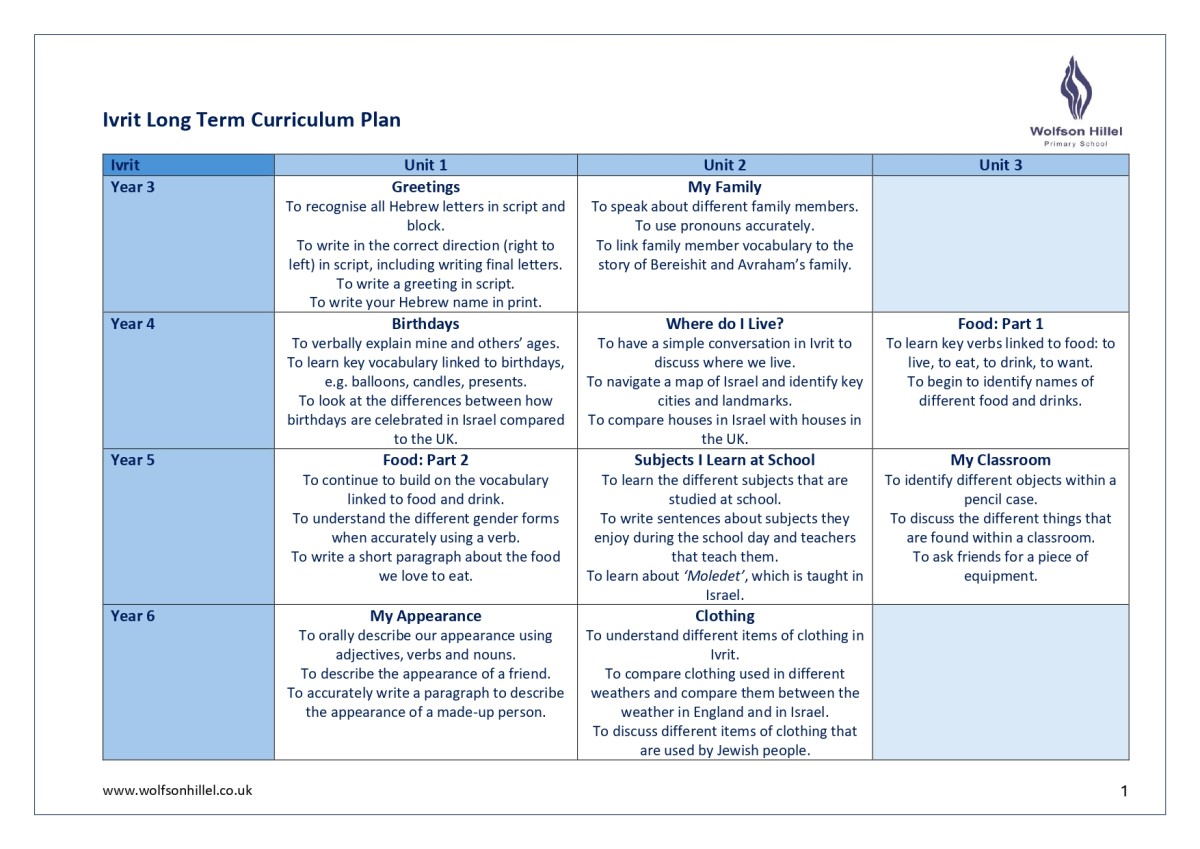
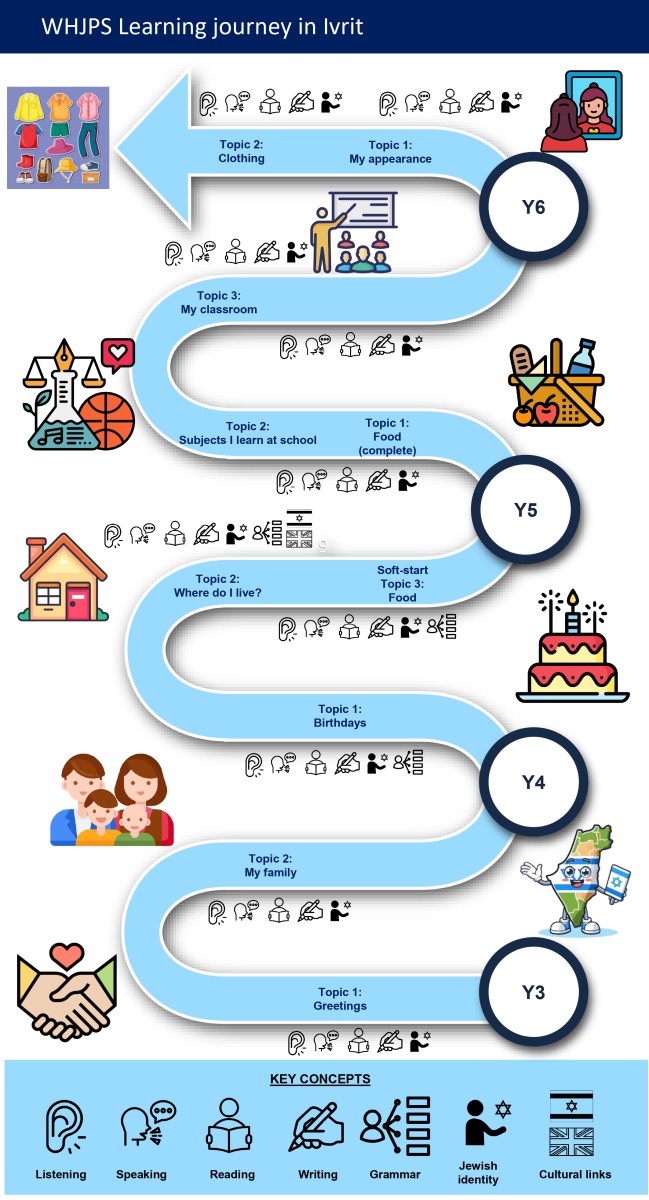
Progress is ensured through a carefully sequenced curriculum built around the six key concepts:
Each unit builds on prior knowledge, with repeated exposure to key vocabulary and structures to develop secure understanding.
At the start of each unit, pupils complete a baseline assessment to:
In Year 3, pupils complete initial reading and script writing assessments to establish starting points.
Teachers use responsive assessment throughout lessons to:
Assessment includes:
Pupils track their progress using unit assessment grids, which outline expected outcomes in each strand and are revisited throughout the unit.
Retrieval practice is embedded in every lesson to support long-term retention, including:
Progress is further supported through:
This approach ensures that all pupils build fluency, confidence and independence in Ivrit over time.